How Do Early Direct Deposit Features Work? 2026 Guide
Curious how do early direct deposit features work? Discover how banks release your paycheck up to two days early in 2026 and what it means for your cash flow.
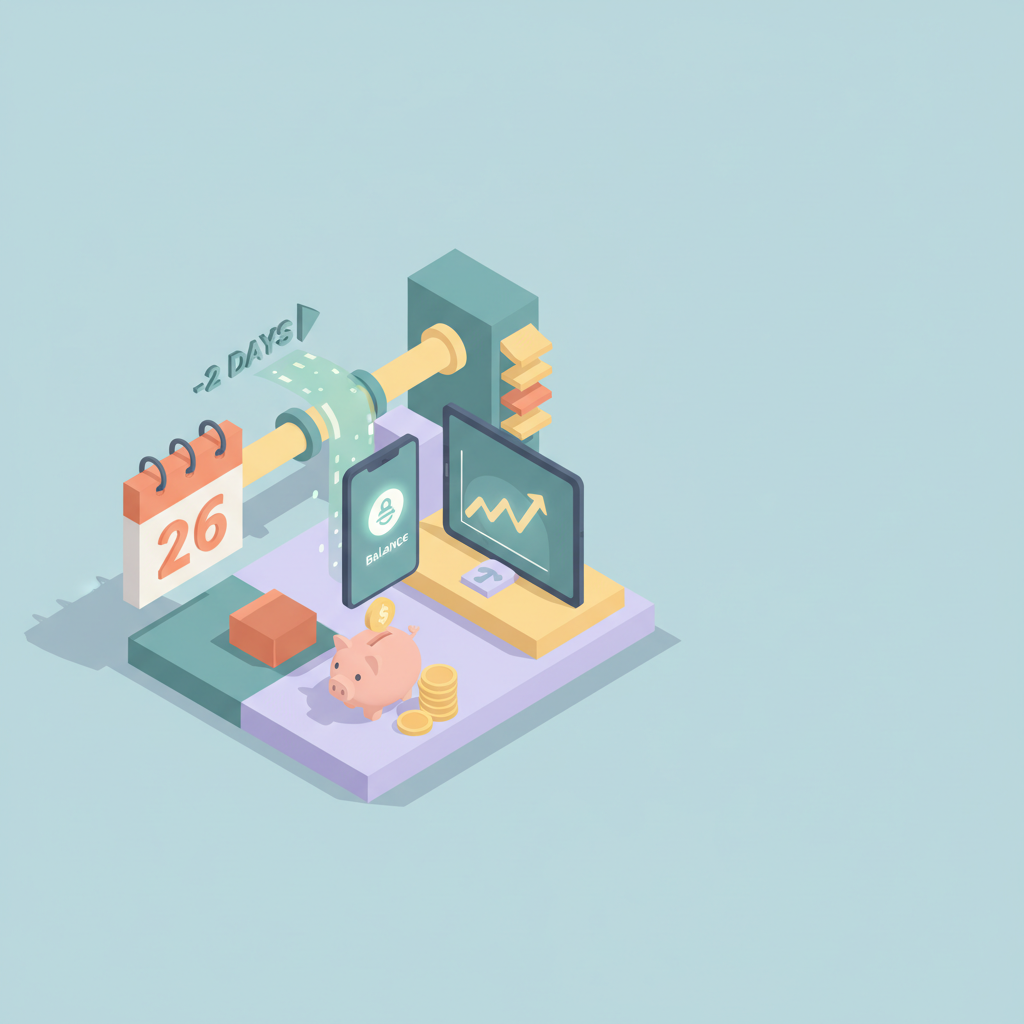
What is Early Direct Deposit and How Does it Function in 2026?
For many American workers, the tradition of waiting until Friday morning to see a paycheck hit their balance is becoming a thing of the past. As we move through 2026, the rise of digital-first banking has made "early pay" a standard expectation rather than a luxury perk. But for those new to the concept, the central question remains: how do early direct deposit features work to get you paid sooner than your coworkers?
At its core, early direct deposit is a banking feature that allows a financial institution to credit your account as soon as it receives notification of an incoming payment from your employer, rather than waiting for the funds to officially settle. In the traditional banking era, banks would receive this notice but hold the funds until the scheduled payday to ensure the transfer was fully cleared through the Federal Reserve's Automated Clearing House (ACH) network. Today, many checking accounts bypass this waiting period as a way to attract and retain customers.
How Do Early Direct Deposit Features Work Chronologically?
To understand the timeline, you have to look at how payroll data moves through the financial system. Typically, your employer sends payroll files to their bank a few days before the actual payday. That bank then sends the information to the ACH network.
In a standard scenario, the ACH sends a "pending" notification to your bank. A traditional bank sees this and waits until the specific settlement date—usually Friday—to release the money. However, a bank offering early access looks at that same notification and treats it as a guarantee of payment. They essentially front you the money on Wednesday or Thursday. Because they trust the ACH notification process, they are willing to take the microscopic risk that the funds won't arrive on Friday, giving you a 48-hour head start on your bills or savings goals.
Why Do Some Banks Offer This While Others Do Not?
Offering early access to funds is largely a competitive strategy used by fintechs and online banks to win over consumers from "Big Four" institutions. By providing two-day early access, these banks solve a liquidity problem for millions of households. There is no magic to the technology; it is simply a policy choice. Large, legacy banks often prefer to hold onto the "float"—the interest earned on money while it sits in the settlement process—whereas newer checking accounts prioritize user experience and cash flow flexibility.
If you are a student looking for these features, you might check out the best checking accounts for college students to see which institutions currently lead the market in early-pay technology. Many of these accounts are designed to minimize friction for those living on tight budgets where two days can make the difference between paying a bill on time or incurring a late fee.
What Are the Requirements to Use Early Direct Deposit?
You cannot simply toggle a switch to get paid early; the system relies on your employer's payroll provider. First, you must have a bank account that explicitly supports this feature. Second, your employer must use a standard ACH payroll system. If your boss still hand-delivers paper checks, or uses a manual wire transfer system that doesn't provide advance ACH notification, the bank has no signal to trigger the early release.
According to the Consumer Financial Protection Bureau (CFPB), direct deposit is generally the safest way to receive a paycheck, but the speed depends entirely on the electronic notification sent by the payer. If your HR department is slow to submit payroll files, your "early" deposit might arrive on Thursday instead of Wednesday, or even on the standard Friday.
Does Geting Paid Early Cost Extra Money?
In the current 2026 banking environment, you should almost never pay a fee for early direct deposit. It is advertised as a free benefit by nearly all major online banks and credit unions. If a bank asks you to pay a monthly subscription or a per-use fee for early access, you should consider looking elsewhere. This feature is often bundled into no-fee accounts that also offer competitive interest rates.
While finding the right checking account is important for daily spending, don't forget to look at your long-term savings as well. If you find yourself with extra cash because of your improved cash flow, you might wonder, should I open a CD or a high yield savings account in 2026? Balancing liquidity with growth is the hallmark of a healthy financial plan.
| Bank Category | Early Pay Availability | Typical Timing | Average Monthly Fee |
|---|---|---|---|
| Online-Only Banks | Very High | 2 Days Early | $0 |
| Credit Unions | High | 1-2 Days Early | $0 - $5 |
| National Big Banks | Low / Growing | Standard Payday | $10 - $15 |
| Neobanks/Fintechs | Universal | 2 Days Early | $0 |
How Do Early Direct Deposit Features Work with Weekends and Holidays?
The ACH system only operates on business days. This is a critical point that often confuses consumers. If your standard payday is Monday, and you usually get your early deposit on the preceding Saturday or Sunday, you might be disappointed. Because the Federal Reserve and the ACH network do not process files on weekends, your bank won't receive the necessary notification until Monday morning, or perhaps late Friday night.
During federal holidays, the timeline shifts even further. If the Friday you usually get paid is a bank holiday, the entire payroll cycle usually moves up one day. In this case, "early pay" might arrive on Tuesday or Wednesday rather than Thursday. Understanding the Federal Reserve's holiday schedule is essential for anyone who relies on their paycheck to hit the account at a specific hour.
Are There Any Risks to Getting Paid Early?
The primary risk is behavioral rather than technical. When you move your payday from Friday to Wednesday, you aren't actually getting "more" money; you are just starting the clock sooner. The gap between paychecks remains exactly the same—usually 14 days for bi-weekly employees. If you spend your entire paycheck by Saturday because you received it earlier, you will have two extra days of "waiting" before the next cycle begins.
Furthermore, if there is a technical glitch in the payroll provider's system and the bank does not receive the ACH file, they will not advance the funds. If you have automated bill payments set up for Thursday morning assuming your "early" pay will be there, and the deposit is delayed, you could face overdraft fees. It is always wise to keep a small buffer in your account. If you are managing a larger portfolio, consistent cash flow is even more vital. For instance, when asking what happens when a CD matures, you realize that timing transitions for any financial product requires a clear understanding of settlement dates and grace periods.
How Do the Banks Make Money if They Give Me Funds Early?
You might wonder what the "catch" is. Banks aren't doing this out of pure charity. By offering early deposit, they encourage you to make their account your "primary" bank account. When your full paycheck is deposited into their institution, they can use those deposits to fund profitable loans or buy government securities. They also earn interchange fees every time you swipe your debit card. The two-day head start is a marketing cost they are happy to pay to ensure you aren't using a competitor's app.
As of 2026, data from the FDIC National Rates shows that while interest rates have stabilized, the competition for consumer deposits remains fierce. Banks are constantly innovating with features like early pay, fee-free overdrafts, and integrated budgeting tools to capture market share.
Is Early Direct Deposit Different from an Earned Wage Access (EWA) App?
Yes, they are fundamentally different tools. EWA apps (like Dave or Earnin) often require you to "verify" your hours worked and may charge a fee or a "tip" to send you a portion of your wages before your employer even runs payroll. Early direct deposit, conversely, is a bank-side feature that triggers only after your employer has officially processed the payroll. Early direct deposit is safer and cheaper because it doesn't involve a third-party loan or a claim on your future wages; it is simply your bank being faster at processing existing information.
Can Early Direct Deposit Impact My Taxes or Credit Score?
Getting paid two days early has zero impact on your credit score, as checking account activity generally isn't reported to the major credit bureaus (Equifax, Experian, and TransUnion). However, it does affect your liquidity, which can help you avoid late payments on credit cards—indirectly helping your score.
Regarding taxes, the IRS cares about when the money was earned and the total amount on your W-2 at the end of the year. The specific day of the week you received the funds into your bank account is irrelevant for tax purposes. If you are worried about how interest on your bank accounts affects your tax bill, you should consult a guide to savings account interest tax rules for 2026 to ensure you are reporting everything correctly to the authorities.
Closing Thoughts on Modern Pay Cycles
In 2026, the question is increasingly no longer "how do early direct deposit features work," but rather "why is my bank still holding my money?" As real-time payment systems like FedNow continue to expand, the concept of a multi-day "settlement period" is slowly becoming an archaic relic of the 20th century. For the modern consumer, choosing an account with early access is a simple way to gain a bit of breathing room in a monthly budget. By understanding the ACH process and the role of payroll notifications, you can better manage your expectations and ensure your money is working for you the moment it’s earned.
Frequently asked questions
- While most paychecks from employers using standard payroll software will qualify, it is not guaranteed. If your employer submits their payroll files late, your bank won't receive the notification in time to credit your account early.
Related articles
See all →