Mastering How to Open a High Yield Savings Account in 2026
Learn how to open a high yield savings account in 2026 with our step-by-step playbook. Maximize your earnings with current APY strategies and top bank picks for this year.

Opening a new bank account should be an empowering financial milestone, yet many consumers hesitate because they aren't sure of the logistics. If you are wondering how to open a high yield savings account in 2026, you are already ahead of the curve. With inflation stabilizing and the Federal Reserve maintaining a watchful eye on interest rates, the gap between traditional brick-and-mortar savings and online high-yield options has remained significant. While the national average for a standard savings account often hovers near a meager 0.46%, the top-tier online accounts are still offering many multiples of that rate for savvy savers.
In this playbook, we will break down the exact steps required to move your money from a low-interest environment into a high-growth vehicle. Whether you are building an emergency fund or saving for a down payment, understanding how to open a high yield savings account is the first step toward true financial optimization. We will cover documentation, funding, and the critical selection criteria that define the best high-yield savings accounts in the current market.
Step 1: Research the Best Rates and Terms for 2026
The landscape for savings changed significantly after the rate-hike cycles of previous years. In 2026, the most competitive yields are consistently found at online-only institutions and certain credit unions. Unlike traditional banks that maintain expensive physical branches, these institutions pass their overhead savings to you in the form of higher Annual Percentage Yields (APYs).
When researching, do not look at the APY in a vacuum. You must also consider the savings account minimum balance requirements explained for each institution. Some banks offer their highest rates only to those who maintain a balance of $5,000 or more, while others have zero minimum requirements. Additionally, check for tiered interest rates where the top APY only applies to the first $25,000 of your balance.
Before finalizing your choice, it is also wise to understand the broader economic context. You might ask, do high yield savings rates follow the Fed? Generally, they do. If the Federal Open Market Committee adjusts the federal funds rate, your HYSA rate will likely follow within a few weeks. This is why many savers in 2026 are diversifying their cash by looking at the best 18 month CD rates of 2026 to lock in high yields in case rates drop later in the year.
Step 2: Verify FDIC or NCUA Insurance
Security is paramount when learning how to open a high yield savings account. You should never deposit your hard-earned money into an institution that is not backed by the federal government. For banks, this means the Federal Deposit Insurance Corporation (FDIC). For credit unions, it is the National Credit Union Administration (NCUA).
According to the FDIC's National Rates and Rate Caps, the insurance limit is standard at $250,000 per depositor, per insured bank, for each account ownership category. If you have more than $250,000 to save, consider spreading your deposits across multiple institutions or opening a joint account, which effectively doubles your coverage to $500,000.
Step 3: Gather Your Documentation
The application process for a high-yield savings account is almost entirely digital in 2026. To streamline the setup, have the following information ready:
- Social Security Number (SSN) or ITIN: Required for tax reporting by the IRS.
- Government-Issued ID: A valid driver's license, passport, or state ID. Most mobile apps will ask you to take a photo of the front and back of this ID.
- Physical Address: Banks generally cannot open accounts for individuals using a P.O. Box as their primary residence.
- Existing Bank Details: You will need the routing and account number of your current checking account to perform the initial funding transfer.
If you have had issues with banking in the past, such as unpaid fees or involuntary closures, the bank will likely check your record using a specialized reporting agency. Understanding ChexSystems explained: how to get a bank account in 2026 can be vital if you find your application denied during this phase.
| Bank Type | Typical APY Range | Minimum to Open | Accessibility |
|---|---|---|---|
| Top-Tier Online Bank | 4.30% - 5.10% | $0 - $100 | Mobile App/Web |
| Large National Bank | 0.01% - 0.15% | $25 - $100 | Branch/Mobile |
| Regional Credit Union | 3.50% - 4.50% | $5 - $25 | Branch/Mobile |
| Neobank (Fintech) | 4.00% - 5.25% | $0 | Mobile Only |
Step 4: Complete the Online Application
Once you have selected your bank and gathered your documents, navigate to the bank's official website. Most modern banks have optimized their workflows so that an account can be opened in under ten minutes. You will be asked to fill out your personal details and consent to a soft credit pull. Unlike a hard credit check for a loan, a soft pull does not impact your credit score.
During this stage, you may also be asked if you want to open a joint account or add a beneficiary (Transfer on Death). Adding a beneficiary is a critical part of estate planning, ensuring your funds skip the probate process and go directly to your loved ones in the event of your passing.
Step 5: Fund Your New Account
After your application is approved, the next step in how to open a high yield savings account is the initial deposit. Most online banks use an Automated Clearing House (ACH) transfer to pull funds from your external checking account.
Be aware of the "funding window." Some banks require you to fund the account within 30 days of opening, or they will automatically close it. Generally, the transfer takes 1 to 3 business days to clear. If you are moving a large sum, check if the bank has a maximum daily transfer limit. If so, you may need to initiate the transfer from your current bank's side to "push" the money into the new high-yield account.
Step 6: Set Up Mobile Banking and Security
With your account funded, immediately download the bank’s mobile application. In 2026, security threats are more sophisticated, so look for features like multi-factor authentication (MFA), biometric login (FaceID or fingerprint), and real-time transaction alerts. These tools are the first line of defense against unauthorized access.
Many high-yield accounts also offer "buckets" or "vaults." This feature allows you to earmark your savings for specific goals (e.g., "Vacation," "New Car," "Taxes") within a single account, making it easier to track your progress without opening five different accounts.
HYSA Launch Day Action Items Checklist List
- Verify FDIC or NCUA insurance status of the institution
- Compare minimum balance requirements vs. your intended deposit
- Take photos of your ID for the digital upload process
- Link your external checking account via ACH
- Enable Multi-Factor Authentication (MFA) on the new app
- Set up an automated recurring transfer to build your balance
Managing Your Account for Maximum Yield
Learning how to open a high yield savings account is only the beginning. Maintaining the account and ensuring it continues to serve your goals is a long-term project. One of the biggest mistakes consumers make is "setting it and forgetting it" for years. Since interest rates are variable, a bank that was leading the market in early 2025 might be trailing the market by mid-2026.
Keep an eye on the Federal Reserve’s H.15 report, which tracks selected interest rates. If you see yields dropping significantly across the industry, it might be time to evaluate if your money would be better served elsewhere. For example, some individuals choose a hybrid approach, keeping 50% of their cash in a liquid HYSA and moving the other 50% into different products. You might look into the best 24 month CD rates for June 2026 to see if locking in a rate for two years makes more sense than a fluctuating savings rate.
Understanding the Limitations of HYSAs
While high-yield savings accounts are excellent for liquidity, they are not always the best vehicle for massive wealth accumulation over decades. The real interest rate (the APY minus inflation) is often quite low. If you find yourself holding hundreds of thousands of dollars in a savings account, you might be losing purchasing power compared to the stock market or other investments.
For those nearing retirement, a savings account might not provide the consistent cash flow needed. In those cases, investigating products like annuities could be beneficial. Many people compare their options by examining retirement planning: how much income will a 500k annuity pay in 2026? to see if a guaranteed income stream beats a variable savings yield.
Furthermore, be aware of Regulation D. While the Federal Reserve indefinitely suspended the six-withdrawal-per-month limit in 2020, many banks still enforce their own internal limits on how often you can move money out of a savings account. Always check your bank's fee schedule to avoid unnecessary "excessive transaction" penalties.
Common Myths About High-Yield Savings Accounts
As you navigate the process of how to open a high yield savings account, you will likely encounter outdated advice or myths. Here are three of the most common ones debunked for 2026:
Myth 1: Online banks are less safe than big brand-name banks. As long as the institution is FDIC-insured, your money is protected by the full faith and credit of the United States government up to the $250,000 limit. It does not matter if the bank has 5,000 branches or zero.
Myth 2: You need a lot of money to start. In the modern banking era, many of the highest-yielding accounts have a $0 or $1 minimum opening deposit. Financial technology companies have made it possible for anyone to start saving with just their spare change.
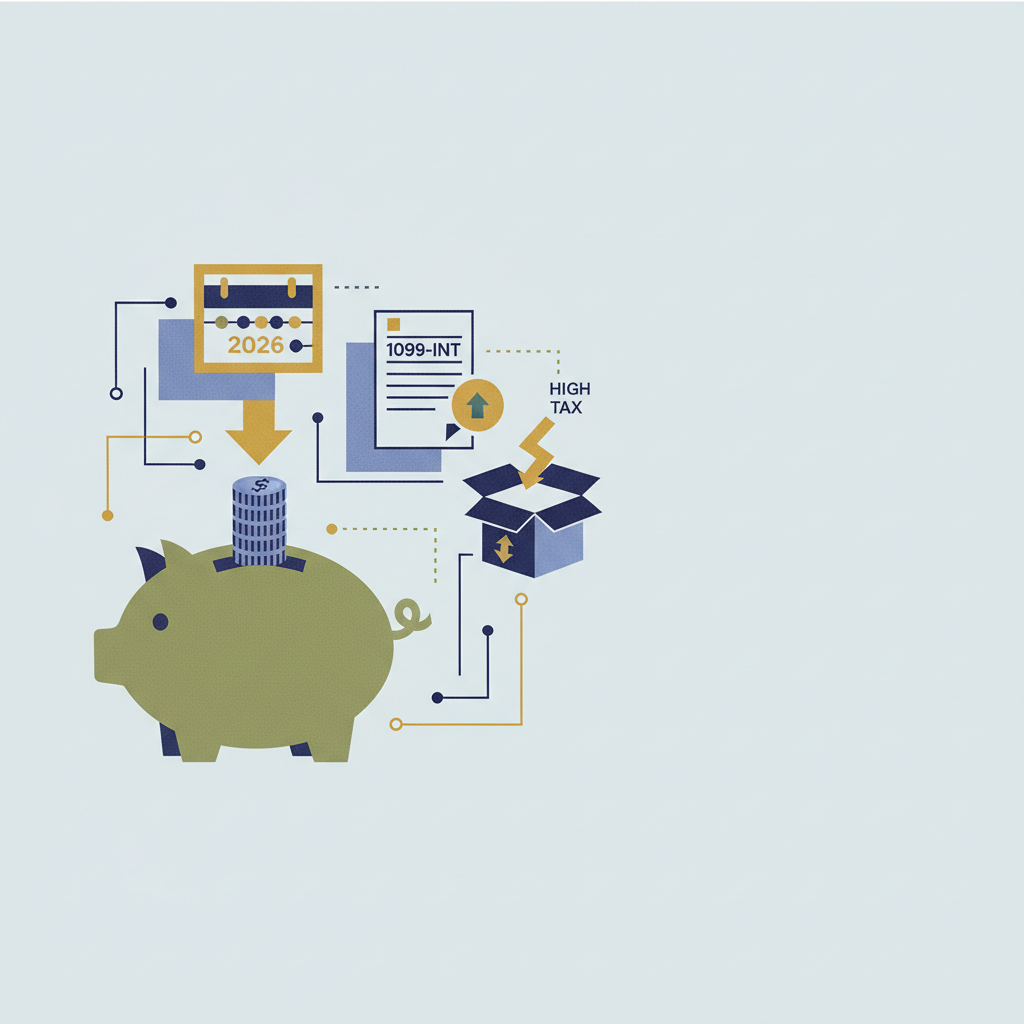
Myth 3: Taxes won't be a factor. Interest earned in a high-yield savings account is considered taxable income. If you earn more than $10 in interest over the course of the year, the bank will send you Form 1099-INT, and you will owe taxes at your ordinary income rate. This is one reason some investors look at a HSA as a retirement account explained: the triple tax advantage because HSAs offer ways to save for medical costs tax-free, unlike a standard savings account.
Why 2026 is a Great Year for Savers
The 2026 economic environment is particularly friendly toward those who hold cash. We have moved past the extreme volatility of the mid-2020s, and the banking sector has stabilized. Competition among online lenders is at an all-time high, which means they are fighting for your deposits by offering better apps, higher rates, and fewer fees.
If you have been keeping your money in a traditional checking account that yields 0.01%, you are essentially paying a "laziness tax." By taking 15 minutes to learn how to open a high yield savings account and executing the steps above, you can turn a stagnant balance into a productive asset.
Imagine a $20,000 emergency fund. At a 0.05% rate in a big bank, you earn $10 a year. At a 5.00% rate in a high-yield account, you earn $1,000 a year. That difference of $990 is quite literally free money, rewarded to you simply for choosing a better place to store your capital.
Final Thoughts on the Application Process
If you encounter any friction during your application, don't be discouraged. The most common issues are simply identity verification failures. This often happens if you have recently moved or changed your name. Usually, a quick upload of a utility bill or a social security card scan will clear up the issue. Once the account is open, the hard part is over. From there, your only job is to watch the interest compound and ensure your savings goals remain on track.
By following this 2026 playbook, you aren't just opening an account; you're building a foundation for future financial flexibility. Whether you eventually transition those funds into broader investments or keep them liquid for a rainy day, the HYSA remains the gold standard for short-term cash management.
Frequently asked questions
- In 2026, most online applications take between 5 to 10 minutes. If the bank can verify your identity instantly through digital databases, your account can be approved immediately. Funding the account via ACH usually takes an additional 1 to 3 business days.
Related articles
See all →