How to Open a High Yield Savings Account Online in 2026
Learn how to open a high yield savings account online in 2026. Compare the best digital banking options and discover how to maximize your APY while keeping your funds secure.

Opening a high-yield savings account is one of the fastest ways to improve your financial health without taking on the risks of the stock market. In 2026, the digital banking landscape has become more competitive than ever, offering consumers interest rates that dwarf the national average. If you are wondering how to open a high yield savings account online, the process is now streamlined to take less than ten minutes. By shifting your idle cash from a traditional brick-and-mortar institution to an online powerhouse, you can significantly increase your annual earnings while maintaining full liquidity.
Before you dive into the application process, it is essential to understand what makes a high-yield savings account truly "high yield." Typically, these accounts are offered by online-only banks that do not have the overhead costs of physical branches. They pass these savings on to you in the form of higher Annual Percentage Yields (APY). According to the latest data from the Federal Reserve H.15, while traditional savings rates might hover near 0.45%, top-tier online accounts are still offering yields above 4.50% in the current 2026 economic environment.
| Account Category | Typical APY | Minimum Deposit | Monthly Maintenance Fees |
|---|---|---|---|
| Direct Online Banks | 4.40% - 4.75% | $0 - $100 | $0 |
| Fintech Cash Accounts | 4.60% - 5.00% | $0 | $0 |
| Traditional Bank Online Tier | 3.50% - 4.25% | $1,000+ | $0 - $15 |
| Credit Union Digital High-Yield | 4.20% - 4.60% | $5 - $25 | $0 |
Understanding the Basics: How to Open a High Yield Savings Account Online
The most important first step in learning how to open a high yield savings account online is gathering your documentation. Gone are the days of mailing in paper checks or waiting for physical signature cards. In 2026, the entire process is digital. To ensure a smooth application, you will need your Social Security number, a valid government-issued ID (such as a driver's license or passport), and the routing and account numbers for the bank you intend to use for your initial deposit.
Since these accounts are primarily managed through mobile apps and websites, security is a paramount concern for many new users. You should check that any institution you choose carries insurance from the Federal Deposit Insurance Corporation (FDIC) or the National Credit Union Administration (NCUA). If you have concerns about the safety of digital banking, you can read more in our guide on are online savings accounts safe? protection and security guide 2026.
Direct Online Banks: The Industry Standard
Direct online banks, such as Ally, Marcus by Goldman Sachs, or Capital One, have long been the leaders in the high-yield space. These institutions are established banks with full FDIC insurance. They tend to offer the most stable user experiences because they own the underlying technology and banking licenses.
When you open a savings account, these banks focus on providing a high level of customer service through 24/7 chat and phone support, which can be a comfort if you are moving large sums of money. Because they don't have physical branches, they can afford to keep fees at a minimum. Most of these accounts have no monthly maintenance fees and no minimum balance requirements to earn the advertised APY.
[[PROSCONS title="Direct Online Banks — Pros & Cons"] + FDIC-insured directly by the institution + Mature mobile apps and reliable customer service + Usually have no monthly fees or minimums - No physical branches for cash deposits - Rates may be slightly lower than "disruptor" fintechs [[/PROSCONS]]
Fintech Cash Management Accounts
Fintech companies like Wealthfront or Betterment offer "Cash Management Accounts" (CMAs). While these are not technically savings accounts in the traditional sense, they function almost identically for the end-user. These companies partner with a network of banks to hold your deposits, often providing even higher FDIC coverage (sometimes up to $2 million or more) by spreading your funds across multiple member banks.
These accounts are often tied to best robo advisors compared 2026: top picks for every investor, making them an excellent choice for individuals who want their savings and investments in one place. If you are already looking for choosing the best brokerage for beginners in 2026: a complete guide, a CMA might be the most convenient way to keep your liquid cash ready for future investment opportunities.
[[PROSCONS title="Fintech Cash Management — Pros & Cons"] + Often offer the highest APYs on the market + Extremely high FDIC insurance through partner bank networks + Seamless integration with investment tools - Support is primarily digital-first (chat/email) - Not a traditional bank; relies on third-party partnerships [[/PROSCONS]]
Step-by-Step Guide to Opening Your Account
Once you have selected the right type of institution, the actual application process is straightforward. Follow these steps to ensure your account is set up correctly for the 2026 tax year and beyond.
1. Compare Current Rates and Features
Don't just look at the APY. Check for features like "buckets" or "vaults" which allow you to organize your savings for different goals, such as an emergency fund or a down payment on a home. Understanding what is APY on a savings account in 2026? is vital here, as it shows you the real return after compounding.
2. Complete the Online Application
You will fill out a form with your name, address, date of birth, and employment status. Federal law requires banks to verify this information under the "Know Your Customer" (KYC) regulations to prevent money laundering and fraud. This is a standard procedure for any legitimate financial institution.
3. Verify Your Identity
Most banks in 2026 use automated software to verify your ID. You may be asked to snap a photo of your driver's license with your phone and even take a "selfie" to match your face to the ID. This process is secure and usually takes less than 60 seconds.
4. Link an External Bank Account
To fund your new high-yield account, you will need to link your existing checking account. This is typically done via a service like Plaid, which allows you to log into your other bank and instantly verify ownership. If you prefer the old-fashioned way, you can use micro-deposits, where the bank sends two small amounts (like $0.05 and $0.12) to your account, and you confirm those values 2-3 days later.
5. Make Your Initial Deposit
Once linked, you can initiate a transfer. Most online banks have no minimum deposit required to open the account, though some may require a small amount (like $100) to keep the account active. Remember that it may take 1-3 business days for the funds to fully clear and begin earning that high interest rate.
The Role of Interest in Your Financial Strategy
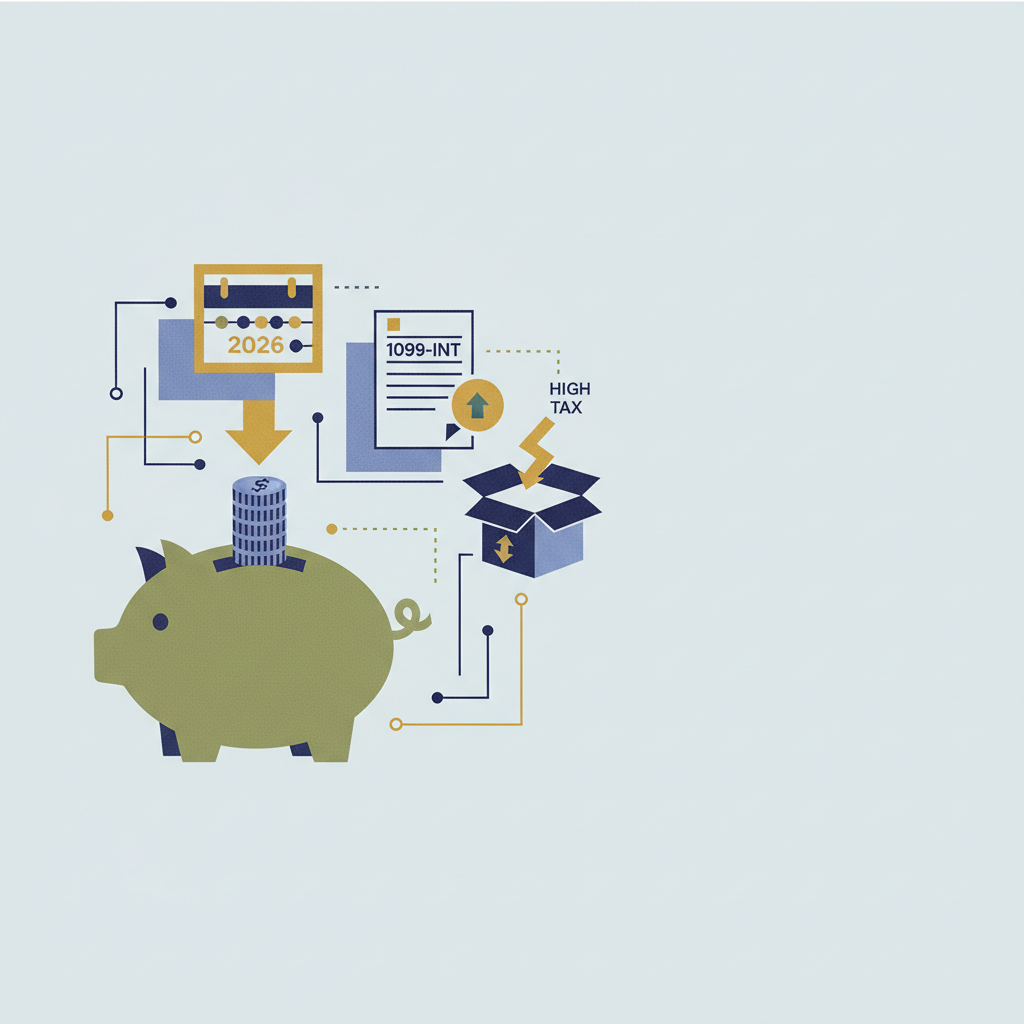
As you begin earning interest, keep in mind that the IRS views these earnings as taxable income. Unlike the growth in some retirement accounts, savings interest is generally taxed at your ordinary income rate. You can find more details in our guide to savings account interest tax rules for 2026. Even with the tax implications, the difference between earning 0.01% at a big bank and 4.70% at an online bank can equate to hundreds or even thousands of dollars in extra cash each year for the average household.
If you find that your savings balance is growing beyond what you need for an emergency fund, you might consider diversifying. Many consumers in 2026 are looking at savings account vs money market account: 2026 comparison guide to see if they can get slightly better rates or more flexible access to their funds. Others may look toward fixed-income vehicles like CDs if they don't need the money for a set period. For those looking for the absolute highest yields, checking our list of best 5 year CD rates for July 2026 may provide a more stable, long-term return than a variable-rate savings account.
Why 2026 is a Crucial Year for Online Yields
Following the economic shifts of 2025, the Federal Reserve has maintained a stance that keeps yields attractive for savers. However, high-yield savings account rates are variable. This means that if the Fed decides to cut rates later this year, your APY will likely drop shortly thereafter. This is the primary reason why knowing how to open a high yield savings account online quickly is an advantage—it allows you to capture high rates as soon as they appear.
According to the FDIC's National Rates and Rate Caps, the spread between the national average and the top-performing online banks is currently at a near-historic high. Staying with a traditional bank that pays a pittance is effectively losing money to inflation. Even if inflation is moderated, your purchasing power only grows if your interest rate exceeds the inflation rate.
Traditional Banks with Online Tiers
Some legacy institutions, like Chase or Wells Fargo, have introduced "exclusive" online-only savings tiers to compete for deposits. While these can be attractive if you already have a checking account with them, be wary. These accounts often require a high minimum balance (sometimes $10,000 or $25,000) to waive monthly fees or to access the high-yield rate. In contrast, the best online savings accounts 2026 offer these rates to everyone, regardless of their balance size.
[[PROSCONS title="Traditional Bank Online Tiers — Pros & Cons"] + Ability to use local branches for some services + Potential for "relationship" bonuses if you have a mortgage or loan + Fast internal transfers between checking and savings - Often require very high minimum balances - Monthly maintenance fees are common if requirements aren't met - Generally offer lower APYs than online-only competitors [[/PROSCONS]]
Maximizing Your Online Banking Experience
Once your account is open, the work isn't quite finished. To get the most out of your high-yield savings account, consider these advanced strategies:
- Automate Your Savings: Set up a recurring transfer from your checking account to your high-yield account every payday. This ensures you are paying yourself first.
- Monitor Rates Monthly: Because these rates are variable, it pays to check the market once a month. If your bank drops its rate significantly while others remain high, it may be time to switch. The process of how to open a high yield savings account online is so easy that "bank hopping" for better rates is a viable strategy in 2026.
- Use Buckets for Goal Setting: Many online banks now allow you to create sub-accounts. Seeing a "Vacation Fund" grow with interest is much more motivating than seeing a single lump sum.
If you find yourself with excess cash and have already padded your high-yield savings, it might be time to look at different investment vehicles. Understanding the trade-offs between liquidity and growth is key. For example, comparing a taxable brokerage vs Roth IRA: finding the best investment in 2026 can help you decide if your long-term goals are better served by a brokerage account once your short-term savings are secured.
Frequently asked questions
- Most online applications take between 5 and 10 minutes. If your identity is verified instantly, your account is usually opened immediately, though it may take a few days for your first deposit to clear.
Final Thoughts on Digital Savings in 2026
In the grand scheme of personal finance, learning how to open a high yield savings account online is one of the highest-leverage actions you can take for the effort required. It moves you from the "slow lane" of traditional banking interest into a high-performance environment where your money works as hard as you do.
Whether you choose a dedicated online bank, a fintech cash management account, or a digital tier from a national brand, the key is to look past the marketing and focus on the APY, the fee structure, and the ease of use. By following the steps outlined above, you can secure a top-tier rate today and ensure your emergency fund or down payment savings are protected by federal insurance while they grow. As the 2026 economic landscape continues to evolve, staying mobile and informed will be your best defense against stagnant wealth. Move your money to where it is treated best, and let compounding interest do the rest of the heavy lifting for you.
Related articles
See all →