Smart Wealth Building: How Much Should I Invest Each Month in 2026?
Wondering how much should i invest each month? Learn the best 2026 strategies for retirement, compounding growth, and balancing your monthly budget for max wealth.
Determining your ideal monthly contribution is the most critical step toward long-term financial independence. As we move through 2026, the question of how much should i invest each month has become even more pertinent given the shifting interest rate environment and the evolving job market. While there is no universal number that fits every household, financial experts generally suggest that a target of 15% to 20% of your gross income is the gold standard for sustainable wealth building. However, knowing your specific number requires a deep look at your personal goals, debt levels, and the power of compound interest.
What is the basic rule of thumb for monthly investing in 2026?
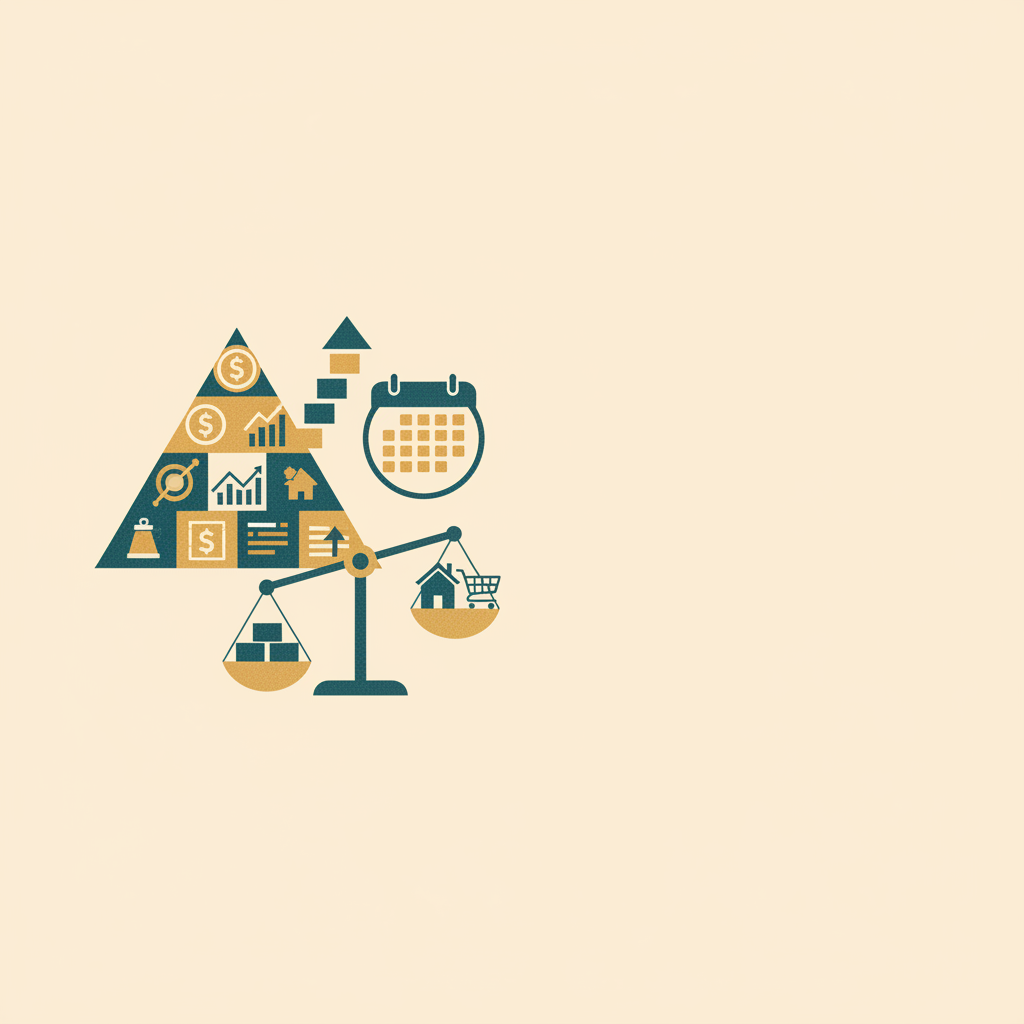
The most commonly accepted baseline is the 50/30/20 rule. Under this framework, 50% of your after-tax income goes to needs, 30% to wants, and 20% to financial goals. In 2026, many savvy consumers are prioritizing that 20% towards investing rather than just stockpiling cash. If you are just starting out, even 5% or 10% is significantly better than zero. The goal is to build the habit first, then scale the amount as your income grows. By using a brokerage for beginners in 2026, you can automate these contributions so they occur before you have the chance to spend the funds elsewhere.
Why does starting early matter more than the amount invested?
Time is the most valuable asset in any portfolio. If you are asking how much should i invest each month, you must also ask for how long. Thanks to the mathematics of compound interest, a 25-year-old investing $300 a month may end up with a larger nest egg than a 45-year-old investing $1,500 a month. In 2026, with inflation hovering near historical norms, the real return on your investments depends heavily on giving your capital time to weather market volatility. When you look at index funds vs ETFs in 2026, the long-term compounding effect is what truly drives the growth of those diversified holdings.
How do I calculate my specific monthly investment target?
To find your number, start with your "End Goal" and work backward. If you want to retire with $2 million in 30 years, assuming a 7% average annual return, you would need to invest roughly $1,700 per month. If that number feels out of reach, don't panic. You can start by maximizing your employer match in your 401(k). According to the Federal Reserve's latest reports on household economics, many Americans are missing out on "free money" by not contributing enough to trigger their full employer match. This match should be the very first part of your monthly investment calculation.
Should I prioritize debt repayment over monthly investing?
This is the classic financial dilemma. As of mid-2026, interest rates on high-yield savings and certain debt instruments have stabilized. If you have credit card debt with an APR above 15%, paying that off offers a "guaranteed return" that likely beats the stock market. However, if you have a mortgage at 4% or student loans at 5%, you are often better off investing your surplus cash. Many investors choose to park their cash in a HYSA, T-Bills, or CDs for short-term needs while simultaneously contributing to their long-term investment accounts. This balanced approach ensures you are tackling the present while securing the future.
How does the current interest rate environment affect my investment choice?
In 2026, the yields on traditional savings products have remained higher than in the previous decade. According to the FDIC National Rates and Rate Caps, the average savings account still pays much less than online high-yield options. When deciding how much to invest, you should distinguish between "saving" and "investing." Saving is for the next 1-3 years (emergency funds, house down payments), while investing is for 5+ years. If you have excess cash that you won't need for a decade, moving it from a standard savings account into the market is usually the wiser move for inflation protection.
| Monthly Investment | 10 Years Total | 20 Years Total | 30 Years Total |
|---|---|---|---|
| $100 | $17,308 | $52,093 | $121,997 |
| $250 | $43,271 | $130,232 | $304,992 |
| $500 | $86,542 | $260,463 | $609,985 |
| $1,000 | $173,085 | $520,927 | $1,219,971 |
| $2,000 | $346,169 | $1,041,853 | $2,439,942 |
How much should I invest each month for retirement specifically?
For retirement, the specific vehicles you use—like a 401(k), Roth IRA, or even annuities—will dictate how much of your monthly budget is "tax-advantaged." Many retirees in 2026 are looking at how annuities are taxed in retirement to understand the net output of their monthly contributions. Ideally, you should aim to max out your Roth IRA or 401(k) limits before moving into taxable brokerage accounts. As of 2026, the IRS has adjusted contribution limits upward to account for cost-of-living increases, making it possible to shield more of your income from taxes than ever before.
What if I can only afford a small amount each month?
The psychology of investing is just as important as the math. In 2026, fractional shares and zero-commission trading mean that you can start with as little as $5. If you are asking how much should i invest each month because you feel $50 isn't enough to matter, reconsider the data from the SEC regarding the costs of waiting to invest. Starting with $50 a month today is significantly more productive than waiting three years to start with $150 a month, because you lose those years of compounding growth.
Should I adjust my monthly investment based on market conditions?
While it is tempting to invest more when the market is up and less when it is down, this is a form of "market timing" that usually fails. A better strategy for 2026 is dollar-cost averaging. By investing a fixed amount every single month regardless of price, you naturally buy more shares when prices are low and fewer when prices are high. This lowers your average cost per share over time. Consistent monthly investing removes the emotional stress of watching the daily tickers and ensures you stay disciplined through the inevitable market cycles.
How do I balance monthly investing with an emergency fund?
Before you commit a large sum to the market, you must have a liquid safety net. Most financial planners suggest 3 to 6 months of living expenses. In the current 2026 economy, having this buffer in a liquid account is vital. You can compare the differences between a Savings Account and a Money Market Account to see where your emergency fund earns the most while remaining accessible. Once that fund is established, every extra dollar of your "financial goals" budget can be channeled into your monthly investment plan.
Is there a limit to how much I should invest each month?
While it's rare to hear "you're investing too much," there is a point of diminishing returns if it compromises your quality of life or prevents you from owning a home. If you have already reached your retirement targets based on your projected future spending, you might choose to pivot higher monthly amounts into lifestyle upgrades or charitable giving. However, for most workers in 2026, the biggest risk remains under-investing. Data from the Bureau of Labor Statistics on consumer expenditures shows that many households spend significantly on depreciating assets like new cars when those funds could be generating wealth in the equity markets.
How do I automate my monthly investment?
Automation is the "secret sauce" of wealth. Most modern brokerages allow you to set up a recurring transfer from your checking account directly into a diversified fund. If you use a sign-up bonus to open a new checking account in 2026, you can designate that specific account as your "investment hub." By removing the manual step of clicking "transfer" every month, you prevent yourself from accidentally spending your investment capital on something else. This "pay yourself first" mentality is how the majority of self-made 2026 millionaires reached their goals.
How should age factor into my monthly investment amount?
Your age significantly dictates your risk tolerance and the amount necessary to reach your goals.
- In your 20s: You have the luxury of time. Even small amounts like $200 a month can grow into a massive sum. Focus on growth-oriented assets.
- In your 30s: This is often the "squeeze" decade with mortgages and children. Maintain your 15% contribution if possible, even if it feels difficult.
- In your 40s: Peak earning years. This is the time to "supercharge" your monthly investment. If you haven't hit the 20% mark yet, now is the time to eliminate lifestyle creep and ramp up contributions.
- In your 50s and 60s: Use "catch-up contributions" allowed by the IRS. You may also begin looking at lower-risk vehicles or considering if annuities are a good fit for your retirement strategy to ensure a guaranteed income floor.
What are the best assets for monthly investing in 2026?
For most people, a low-cost, broad-market index fund remains the best choice. These funds track the performance of hundreds of companies, providing instant diversification. In 2026, investors are also looking at thematic ETFs that cover artificial intelligence and renewable energy, though these should only make up a small portion of a total portfolio. The core of your monthly investment should remain in proven, diversified vehicles that have a track record of consistent growth. By following a three-fund portfolio strategy, you can keep your monthly management time to a minimum while maximizing your long-term returns.
Can I stop investing once I reach a certain monthly milestone?
Many investors aim for "Coast FIRE," where they have invested enough that their current balance will grow to their retirement goal even if they never add another penny. While this is a liberating milestone, most choose to continue monthly investing to create a larger margin of safety. The economic landscape of 2026 can be unpredictable; therefore, over-preparing is almost always better than under-preparing. If you find yourself with a surplus, you can explore more specialized options, but for the average consumer, the answer to "how much should i invest each month" usually remains "as much as you can comfortably sustain while still living a life you enjoy."
Frequently asked questions
- Most experts recommend 15% to 20% of your gross income. If you are starting late, you may need to increase this to 25% or more.
Ultimately, the journey of wealth creation is less about one-time windfalls and more about the discipline of monthly consistency. By following the 20% rule and utilizing modern financial tools, you can ensure that your future self is well-provided for. Whether you are using index funds, ETFs, or considering how fixed annuities work for long-term stability, the most important step you can take today is to decide on a number and make it automatic. In the landscape of 2026, those who pay themselves first are the ones who find lasting financial peace.
Related articles
See all →