Are CDs Worth It Right Now? Truths and Myths for 2026
Wondering are CDs worth it right now? We debunk the biggest myths surrounding certificates of deposit to help you secure the best guaranteed rates in 2026.

Deciding where to park your hard-earned cash in mid-2026 requires a careful look at the shifting economic landscape. With the Federal Reserve signaling a more neutral stance after the volatility of the mid-2020s, many savers are staring at their screens asking: are cds worth it right now? The answer isn't a simple yes or no; it depends on your liquidity needs, your tax bracket, and your long-term financial goals. However, much of the hesitation around certificates of deposit (CDs) stems from outdated information or common misconceptions.
In this guide, we will dismantle the most persistent myths about fixed-term accounts. Whether you are looking to build a safety net or diversify a conservative portfolio, understanding the reality of CDs is essential for maximizing your return. As of July 2026, the spread between traditional savings and high-yield instruments remains significant, making the lock-in period of a CD a strategic choice for many American households.
By the Numbers: 2026 Snapshot
Myth 1: CDs Are "Dead Money" Compared to Savings Accounts
Many consumers believe that because online savings accounts offer flexibility, the slightly higher rate of a CD isn't worth the trade-off. This myth ignores the primary benefit of a CD: rate protection. While a high-yield savings account (HYSA) features a variable rate that can drop overnight if the Federal Reserve adjust its policy, a CD locks in your yield for the entire term.
If you are comparing treasury bills vs CDs vs HYSA 2026: where to park your cash, you'll notice that the certainty of a CD provides a hedge against falling interest rates. When the Fed pivots toward a lower-rate environment, your HYSA rate will tumble, but your 5-year CD will keep paying 2026's peak yields until maturity.
Myth 2: You Always Lose Money if You Withdraw Early
One of the biggest deterrents for those wondering are cds worth it right now is the fear of the Early Withdrawal Penalty (EWP). While most traditional CDs do charge a fee—often ranging from 90 days to 365 days of interest—the "loss" is usually just a portion of the earnings, not the principal itself.
Furthermore, the 2026 market has seen a surge in "No-Penalty CDs." These products allow you to break the term after an initial seven-day holding period without losing a cent of interest. This makes them a hybrid between a liquid savings account and a high-yield certificate. If you are worried about security, you can rest easy knowing are online savings accounts safe? logic applies here too; CDs at FDIC-insured institutions carry the same gold-standard protections.
Myth 3: CDs Can't Keep Up With Inflation
Critics often argue that after taxes and inflation, the "real" return on a CD is negative. While this was true during the hyper-inflationary spikes of the early 2020s, the current 2026 economic data paints a different picture. With inflation cooling toward the 2.5% to 3% range, a CD earning 4.50% provides a positive real rate of return.
For investors who need even more protection, comparing CDs to other fixed instruments like an annuity vs CD can be enlightening. Both offer ways to preserve purchasing power without the volatility of the stock market. According to the Bureau of Labor Statistics, real wage and interest growth depend heavily on locking in yields that exceed the Consumer Price Index (CPI), a feat currently achievable with mid-to-short term CDs.
Myth 4: Only "Old People" Should Use CDs
The trope of the retiree living on CD ladders is classic, but it's not the whole story in 2026. Younger savers are using CDs as a disciplined way to save for short-term goals, like a down payment on a house in three years or a wedding next year. By removing the temptation to spend from a liquid checking account vs cash management account, younger generations are finding that CDs act as a behavioral "commitment device."
In fact, many Gen Z and Millennial savers are utilizing CDs to protect their house-fund principal from the fluctuations of the equity market. While it is true that a Roth IRA vs Brokerage Account is better for 30-year horizons, a 12-month CD is often the superior choice for a 12-month goal.
Myth 5: CD Ladders Are Too Complicated to Manage
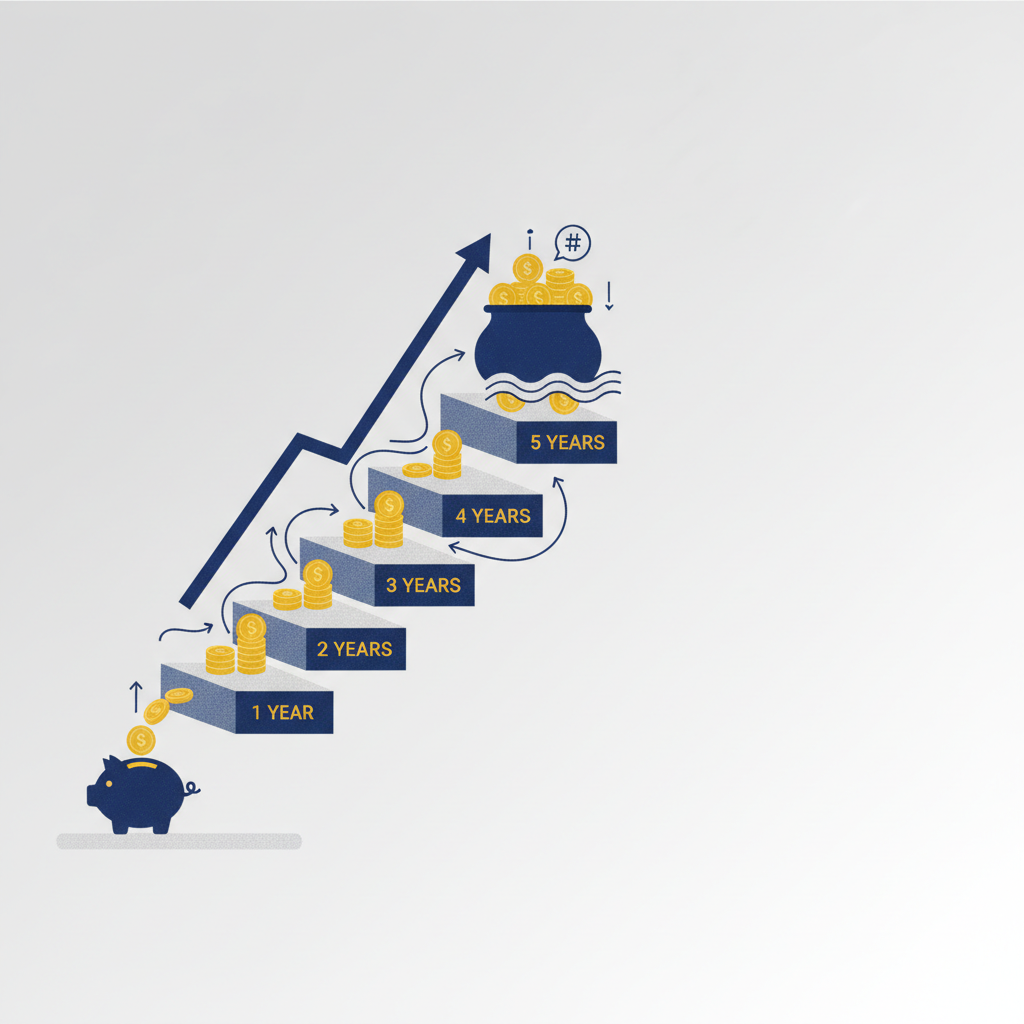
A CD ladder involves splitting your investment into multiple certificates with different maturity dates (e.g., a 1-year, 2-year, 3-year, and 4-year CD). The myth is that this requires constant oversight and a degree in finance. In reality, most online banks in 2026 offer automated laddering tools that move your funds for you.
As the Federal Reserve's H.15 report shows, interest rates rarely move in a perfectly straight line. A ladder ensures that you always have a portion of your cash maturing soon—giving you liquidity—while another portion is locked into potentially higher, long-term rates. It effectively averages out your interest rate risk, much like dollar-cost averaging in a brokerage account.
Are CDs Worth It Right Now in 2026? Evaluating the Alternatives
To determine if certificates of deposit are the right fit for your current portfolio, you have to look at what else is available. In 2026, the competition for your cash is fierce. If you need absolute liquidity, the best high-yield savings account is still the king. However, if you can commit to even six months, the premium offered by a CD often makes it the more logical choice.
CDs vs. Annuities
For those with a longer time horizon (3 to 10 years), Multi-Year Guaranteed Annuities (MYGAs) are a strong competitor. You might find that securing your nest egg with MYGA rates offers slightly higher yields than a 5-year CD, and they often come with tax-deferred growth. However, CDs remain the winner for shorter durations and smaller deposit amounts since they lack the complex surrender charge schedules found in many insurance-based products.
CDs vs. Index Funds
If you are asking are cds worth it right now as a replacement for the stock market, the answer is likely no. Historically, the S&P 500 significantly outperforms fixed-income products over 10-year periods. However, for a "three-fund portfolio" or a conservative allocation, CDs serve as the essential "ballast" that prevents your total portfolio value from cratering during a market correction. Using a beginner's power guide to index funds in tandem with a CD strategy creates a balanced path toward wealth.
""In a world of variable rates and market uncertainty, the CD remains the only contract that guarantees your return to the penny, regardless of what the Fed does next.""
Myth 6: Big National Banks Offer the Best CD Rates
Many consumers stick with the "Big Four" banks out of habit, assuming their size translates to better yields. This is almost never the case. In mid-2026, the best CD rates are consistently found at online banks and local credit unions. While a massive national bank might offer a 0.50% APY on a 12-month certificate, an online competitor might offer 4.50% for the exact same term.
This is why shopping around is critical. Whether you are looking at best local banks in Aurora, IL or checking top-tier online platforms, the "loyalty tax" of staying with a low-yield institutional bank can cost you thousands in interest over a five-year period.
Myth 7: You Have to Pay Taxes on All CD Interest Every Year
There is a common misconception that CDs are tax-inefficient. While it is true that interest earned in a standard CD is taxed as ordinary income in the year it is earned (even if you haven't withdrawn it), there is a simple workaround: IRAs.
Opening an "IRA CD" allows you to enjoy the fixed-rate benefits while deferring taxes until retirement (in a Traditional IRA) or potentially avoiding them altogether (in a Roth IRA). If you are considering how this fits into your broader plan, understanding how annuities are taxed in retirement can help you decide which tax-advantaged wrapper is best for your fixed-income needs.
Summary: The Truth About CDs in 2026
As we look at the second half of 2026, the case for CDs remains strong for the risk-averse saver. They provide a sanctuary from market volatility and a locked-in rate of return that variable savings accounts simply cannot guarantee.
| Feature | Traditional Savings | Standard CD | No-Penalty CD |
|---|---|---|---|
| Interest Rate | Variable | Fixed | Fixed |
| Liquidity | High | Low | Medium |
| 2026 Yield Potential | 0.40% - 4.10% | 4.00% - 4.75% | 3.50% - 4.25% |
| Best For | Emergency Funds | Long-term Goals | Uncertain Horizons |
How to Choose the Right CD Right Now
1. Define your timeline: Only lock up money you won't need until the maturity date unless you choose a no-penalty option. 2. Compare APYs: Don't settle for your local bank's rates without checking online-only alternatives. 3. Check the math on penalties: Sometimes, the higher rate on a traditional CD is so much better than a no-penalty CD that it's worth taking the risk of a potential penalty. 4. Watch the Fed: If experts predict rate cuts, locking in a long-term (3 to 5 year) CD now is a savvy move to preserve your current yield.
In the grand scheme of your financial health, CDs aren't just "worth it"—they are a tactical tool. They provide the peace of mind that comes from knowing exactly how much your money will grow, free from the noise of the stock market and the whims of changing interest rate environments.
Frequently asked questions
- Yes. In a falling rate environment, CDs are actually more valuable because they allow you to lock in today's higher rates for several years, while savings account rates will drop immediately.
Related articles
See all →