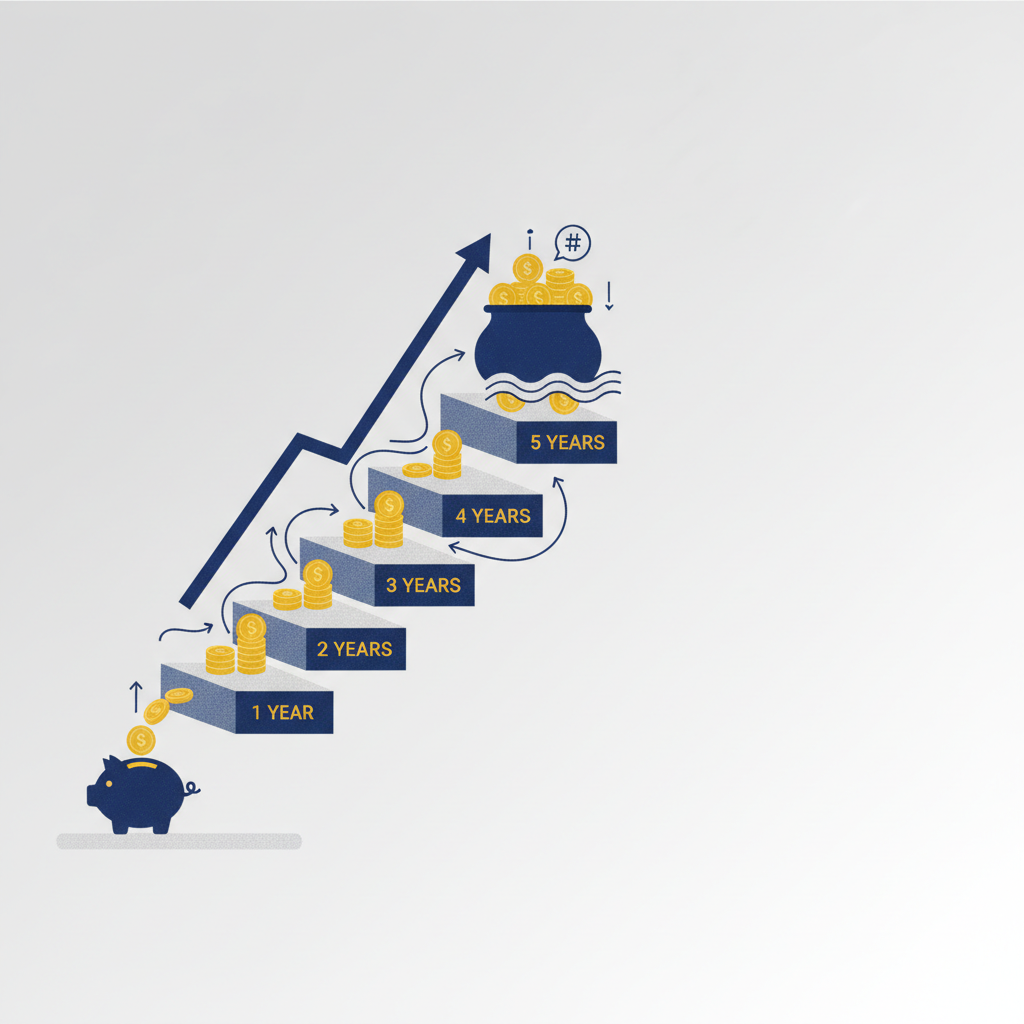
Callable CD Risks Explained: What to Know Before You Invest in 2026
Learn about callable CD risks explained for 2026, including reinvestment risk and call protection, so you can decide if these higher-yielding certificates are right for you.

Saving for the future often leads investors to seek out the security of fixed-income products. In the current economic landscape of 2026, many are discovering that not all certificates of deposit (CDs) are created equal. While traditional CDs offer a guaranteed rate for a fixed term, callable CDs introduce a layer of complexity that can catch the unwary off guard. Understanding callable cd risks explained is essential for any saver looking to maximize yield while protecting their principal. In this guide, we will break down exactly how these instruments function, why banks issue them, and whether the extra yield is worth the potential volatility of having your investment returned to you earlier than expected.
What is a callable CD and how does it function?
A callable CD is a type of certificate of deposit that gives the issuing bank the right, but not the obligation, to terminate the account before its scheduled maturity date. When a bank "calls" a CD, they return your initial principal plus any interest earned up to that point, effectively ending the contract. This feature is primarily used by financial institutions to protect themselves against falling interest rates. If market rates drop significantly below the rate the bank is paying you, the bank can call the CD and reissue new debt at a lower cost.
For investors, the primary draw is usually a higher annual percentage yield (APY) compared to standard, non-callable options. However, as we will explore in the callable cd risks explained below, that higher rate comes with a catch: the bank controls the timeline, not you. According to the Federal Reserve H.15 report, these instruments are frequently offered by brokerage firms and larger national banks rather than smaller credit unions.
Why do banks offer callable CDs in 2026?
Banks offer callable CDs to manage their interest rate exposure. Imagine a bank issues a 5-year CD at 5.00% APY in early 2026. If the Federal Reserve later decides to cut the federal funds rate, and market rates for 5-year CDs drop to 3.00%, the bank is stuck paying you an above-market rate for the remaining years. By including a call provision, the bank retains the option to "refinance" its debt to you. If rates fall, they call your CD, return your money, and you are left searching for a new place to park your cash in a lower-rate environment.
This is a fundamental shift in the power dynamic of a certificate of deposit. In a traditional CD, you lock in a rate for a specific term, and the bank is legally obligated to pay that rate until the end. With a callable CD, the bank essentially has an escape hatch. This is why it is vital to check the "call protection" period—the initial window during which the bank cannot call the CD, typically ranging from six months to two years.
What are the primary callable cd risks explained for 2026 investors?
The most significant risk associated with these accounts is reinvestment risk. Reinvestment risk occurs when your CD is called during a period of falling interest rates. You receive your principal back, but when you go to open a new account, the available rates are much lower than what you were previously earning. This can significantly disrupt a long-term savings strategy, especially for retirees who rely on fixed interest payments for monthly expenses.
Another risk is the lack of liquidity. While the bank has the right to call the CD, you generally do not have the right to withdraw your money early without facing a massive early withdrawal penalty. This creates an asymmetrical relationship where the bank has flexibility that the consumer lacks. Before committing, consider whether you should maximize yield with a 1 year CD which typically offers more predictable terms without the call feature.
| Feature | Traditional CD | Callable CD |
|---|---|---|
| APY Potential | Moderate | Higher |
| Maturity Certainty | Guaranteed | Not Guaranteed |
| Interest Rate Risk | Locked-in | Reinvestment Risk |
| Issuance Type | Mostly Banks | Often Broker-Sold |
| Minimum Deposit | $500 - $1,000 | $1,000 - $10,000 |
How does market volatility impact these risks?
In 2026, market volatility can fluctuate based on inflation data and Federal Reserve policy. If the economy cools and the Fed lowers rates to stimulate growth, the likelihood of your CD being called increases exponentially. Conversely, if rates rise, the bank is unlikely to call your CD because they are perfectly happy keeping your money at a rate that is now lower than the current market average.
This means that as an investor, you are essentially betting against the bank's interest rate forecast. If you think rates will continue to climb, a callable CD might seem safe because the bank won't call it, but you will be stuck in a lower-rate instrument while new high-yield savings accounts offer better returns. If you think rates will fall, you might want to lock in a high rate, but that is exactly when the bank will exercise their call option.
What is the difference between a bank-issued and a brokered callable CD?
It is important to distinguish where you are buying the CD. Brokered CDs are purchased through a brokerage account rather than directly from a bank. Many brokered CDs are callable. One specific risk of brokered CDs is that they are traded on a secondary market. If you need to sell your CD before maturity and it hasn't been called, you might have to sell it for less than its face value if interest rates have risen.
Direct bank CDs are usually simpler but less likely to be callable. If you are comparing options, you might ask, should I open a CD or a high yield savings account? A savings account gives you total liquidity and rate flexibility, whereas a callable CD locks your money up but gives the bank the right to end the deal early.
How does call protection work?
Call protection is a clause in the CD agreement that specifies a timeframe during which the issuer cannot call the security. For example, a "5-year CD non-call 1-year" means the CD has a five-year term, but the bank cannot call it for the first twelve months. After that one-year period, the bank can call the CD at predetermined intervals (monthly, quarterly, or semi-annually).
When evaluating callable cd risks explained, always look for the longest call protection period possible. If the protection period is too short, you are essentially taking on the risk of a short-term CD while expecting the yield of a long-term one. The FDIC's guide to certificates of deposit emphasizes that consumers should verify whether their CD is FDIC-insured, especially when buying through a broker, to ensure their principal is protected even if the institution fails.
Are callable CDs FDIC insured?
Yes, callable CDs are generally covered by FDIC insurance up to the standard limit of $250,000 per depositor, per insured bank, for each account ownership category. This insurance protects your principal investment even if the bank goes under. However, FDIC insurance does not protect you against the risk of the bank calling the CD early. The insurance covers the safety of the funds, not the duration of the interest rate.
For those looking for long-term stability, it is often better to lock in growth with a 5 year CD that is non-callable. This ensures that you actually receive the advertised interest for the full duration of the term, regardless of how market conditions change in late 2026 or beyond.
How should investors weigh the higher yield against the risks?
Deciding to invest in a callable CD requires a cost-benefit analysis. You must ask: Is the extra 0.25% to 0.75% in APY worth the risk that the investment might be cut short in two years? If you are in a high-interest-rate environment and expect rates to stay steady or rise, the risk is lower. However, if you are at the peak of a rate cycle, the risk of a call is at its highest.
Investors should look at the "Yield to Call" (YTC) versus the "Yield to Maturity" (YTM). The YTC tells you what your return will be if the bank calls the CD at the earliest possible date. If the YTC is significantly lower than what you could get from a standard certificate of deposit, the investment might not be as lucrative as it first appears.
What are the alternatives to callable CDs in 2026?
If the callable cd risks explained above make you uneasy, there are several alternatives to consider: 1. Traditional Non-Callable CDs: These offer a locked-in rate for the full term with no surprises. 2. CD Ladders: By spreading your investment across multiple CDs with different maturity dates (e.g., 1-year, 2-year, 3-year), you reduce the impact if one is called or if rates change. 3. Step-Up CDs: These accounts actually increase your interest rate at set intervals, though they are also sometimes callable. 4. Treasury Securities: According to the U.S. Department of the Treasury, Treasury bills and notes are backed by the full faith and credit of the government and often provide competitive, non-callable yields.
Investors who are already managing a diverse portfolio might also look into how to rebalance a portfolio for performance, ensuring that their fixed-income allocation isn't overly exposed to reinvestment risk from callable instruments.
Summary of Key Considerations
To wrap up the callable cd risks explained, remember that these products are designed to benefit the issuer. The higher APY is a form of compensation for the uncertainty you are accepting. If you need the money to be available for a specific life event in five years—like a house down payment or a child's tuition—a callable CD is a gamble. You might find yourself with a pile of cash two years early in an environment where your only options pay half the interest you were previously earning.
Always read the disclosure statement carefully. Look for phrases like "discretionary call" or "subject to redemption." If you don't see "non-callable" explicitly stated, assume there is a call provision. In the 2026 banking market, being an informed consumer is the best way to ensure your savings grow at the pace you expect.
Frequently asked questions
- Yes, banks are typically required to provide a notice period (often 15 to 30 days) before exercising a call option. However, once the notice is given, there is no way for the investor to stop the process.
Related articles
See all →